
Bathroom Design Pitfalls: Not Considering the Time Frame
Bathrooms are dependency chains: design freeze → procurement → rough-ins → inspections → waterproofing → cure → finishes → commissioning.
Ignoring lead times, cure windows, or inspection scheduling creates the most expensive combination: delayed completion plus degraded quality.
Space Optimization in Small Footprints
Maximizing storage, circulation, and fixture placement in compact bathrooms without sacrificing comfort.
Aesthetic Personalization
Tailoring layouts, finishes, lighting, and fixtures to reflect homeowner lifestyle, taste, and daily routines.
Comfort & Wellness Enhancement
Incorporating features like heated floors, rainfall showers, soaking tubs, and layered lighting for relaxation.
Material & Finish Coordination
Selecting moisture-resistant surfaces, durable finishes, and coordinated fixtures that balance beauty with longevity.
Project Scheduling & Critical Path
Effective bathroom project scheduling depends on coordinating material lead times, inspections, curing periods, and approved design decisions.
Project Management Institute — CPM scheduling guidance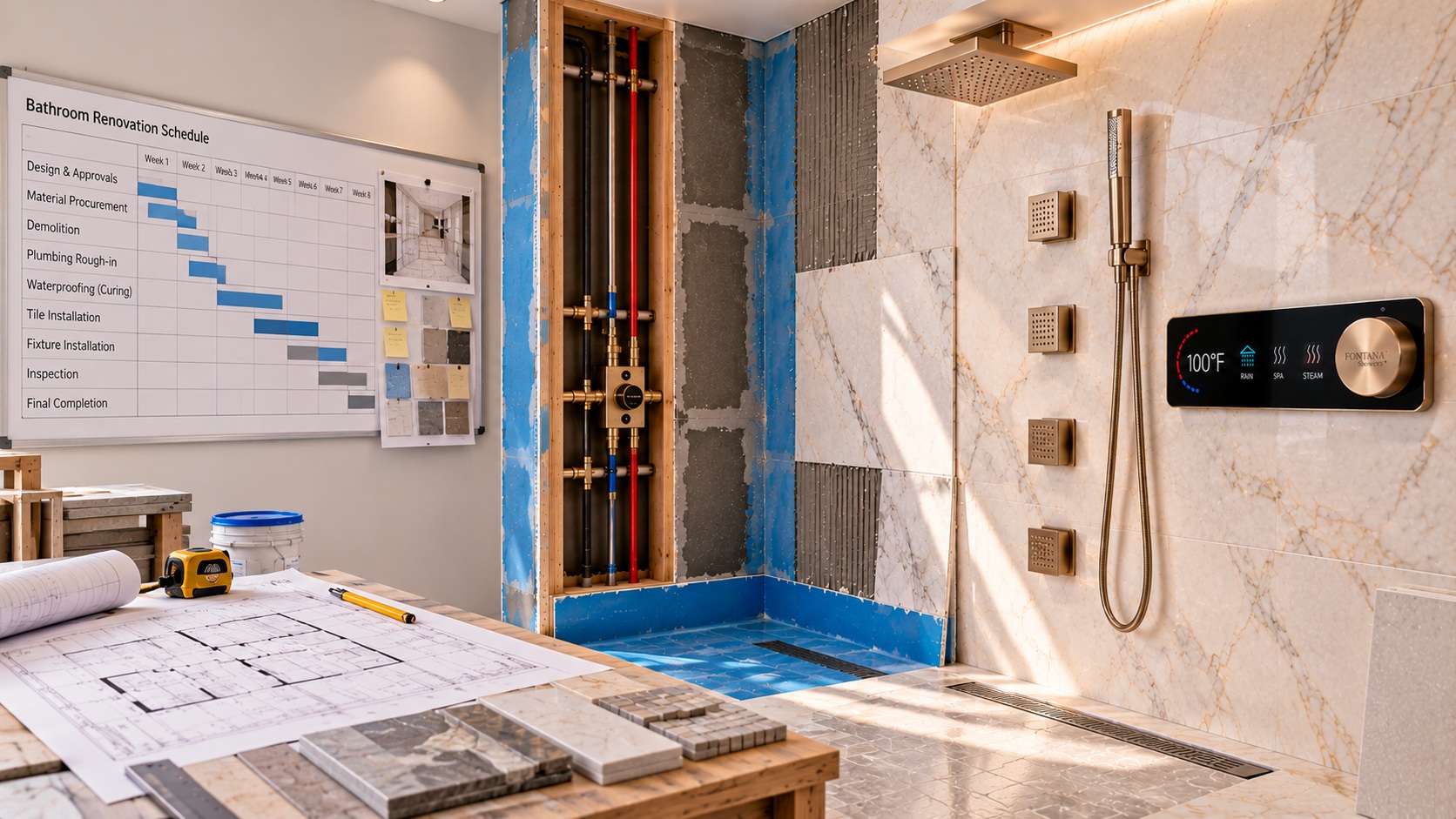
Procurement
Lead times

Inspections
Hold points

Cure Windows
Quality gates

Design Freeze
Decisions

Why Schedules Collapse
Most time-frame problems come from planning gaps: long-lead items are chosen late, inspections are not booked, and cure times are treated like suggestions.
Under time pressure, the build turns into a series of rushed tasks—exactly how hidden defects are created.
Data Matrix: Pitfall → Consequence → Mitigation
| Pitfall | Real-World Consequence | Mitigation (Control) | Where It Hits | Best Prevention |
|---|---|---|---|---|
| Ignoring lead times | Idle labor; forced substitutions; finish mismatch | Procurement plan; order long-lead early; pre-approved alternates | Procurement | Critical path log |
| Missing inspection scheduling | Work stops or rework required; delayed occupancy | Book inspections early; define hold points in schedule | Mid-build | Inspection calendar |
| Compressing cure times | Cracking, bond failure, leaks after handover | Protect cure windows; don’t stack trades on uncured assemblies | Waterproof/tile | Schedule gates |
| Late design changes | Reorders + rework; compromised continuity | Design freeze; change control with schedule impact sign-off | Any phase | Decision deadlines |
Diagram: Bathroom Critical Path
Bathrooms run on dependencies. When you respect the chain, the project finishes faster and with fewer defects.
Design Freeze
Final decisions
Procurement
Long-lead first
Rough-ins
Trades staged
Inspection
Hold point
Waterproof/Tile
Cure windows
Commission + Punch
Leak check • drain test • alignment
Documentation
Closeout
Warranty • shutoff map • as-built
Maintenance plan
Planning a Bathroom Project with Fewer Delays
A realistic bathroom renovation timeline depends on early design decisions, coordinated material procurement, scheduled inspections, and adequate waterproofing and curing periods. Protecting these critical stages helps reduce rushed work, costly changes, and preventable delays. For additional context on avoiding scheduling mistakes, explore our bathroom project time-frame planning guide .

