
Commercial Restrooms
Engineering, Infrastructure Planning, Hygiene Systems, and Operational Design in Public Bathroom Environments
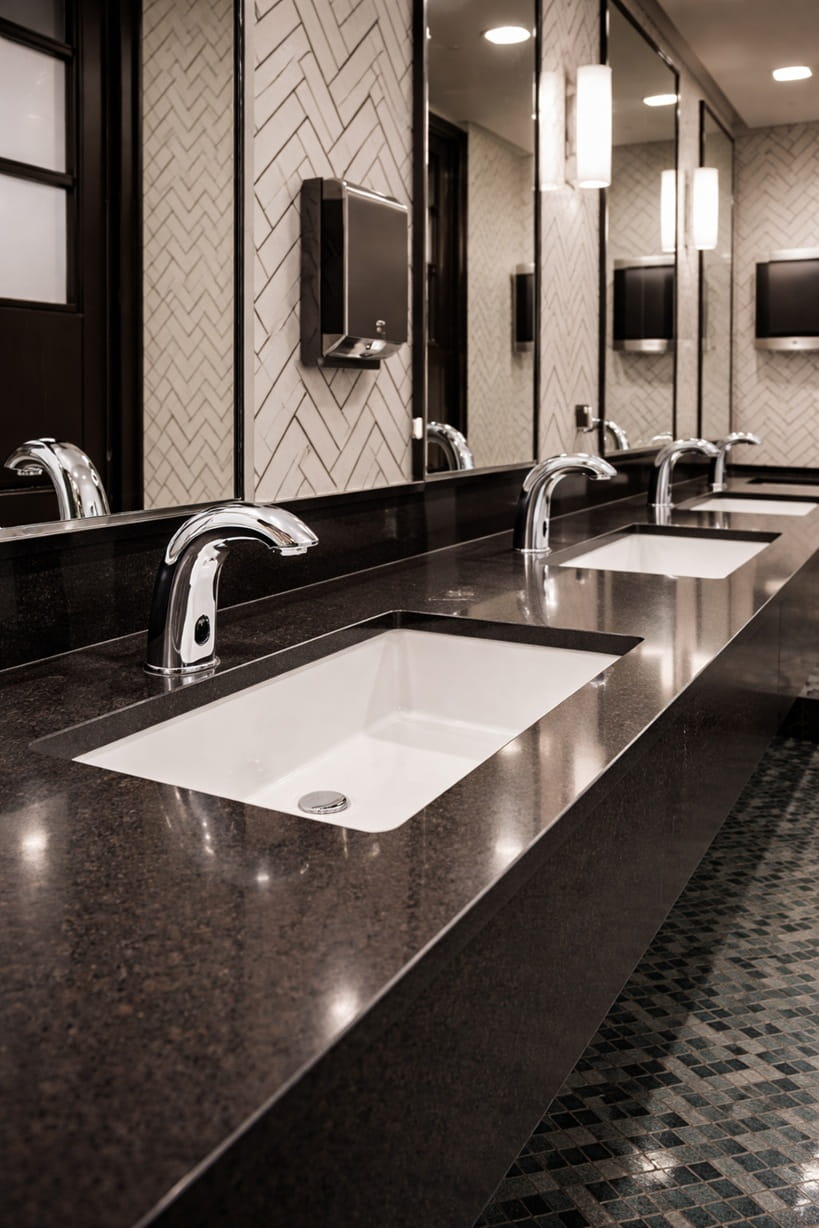
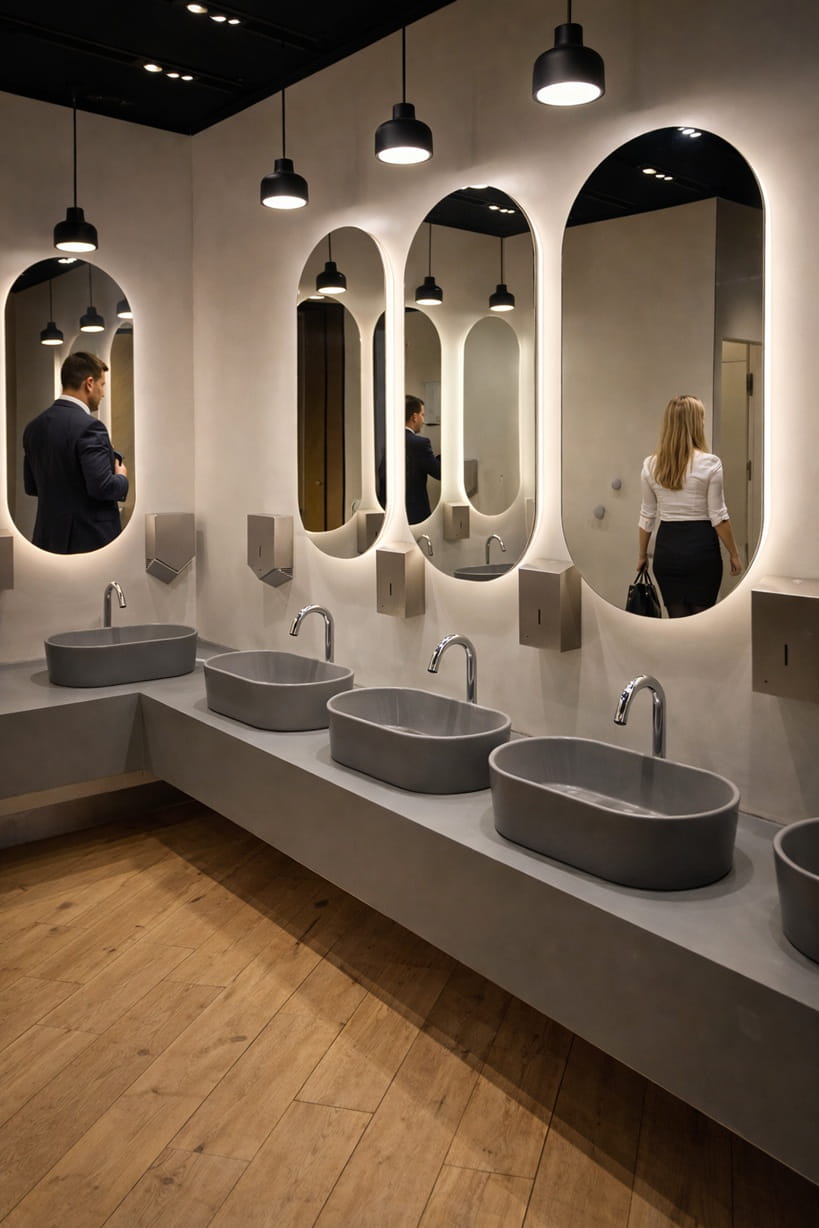

Commercial Restrooms as Critical Public Infrastructure
Commercial restrooms represent one of the most complex operational environments within modern buildings. Unlike residential bathrooms designed for limited private use, commercial restroom facilities must support continuous public interaction, hygiene control, regulatory compliance, and long-term infrastructure durability.
BathroomDSGN.com examines commercial restrooms not from an aesthetic or retail perspective, but as high-performance building systems combining architecture, plumbing engineering, public health science, accessibility planning, and facility management strategy.
Every airport terminal, hospital, shopping center, university, office building, stadium, hotel, and transportation hub depends on restroom systems capable of functioning reliably under unpredictable and intensive usage conditions.
Commercial restrooms influence public hygiene standards, water and energy consumption, maintenance labor costs, user accessibility, infection control, and building operational efficiency.
Because of this, restroom design becomes an essential component of modern infrastructure planning.

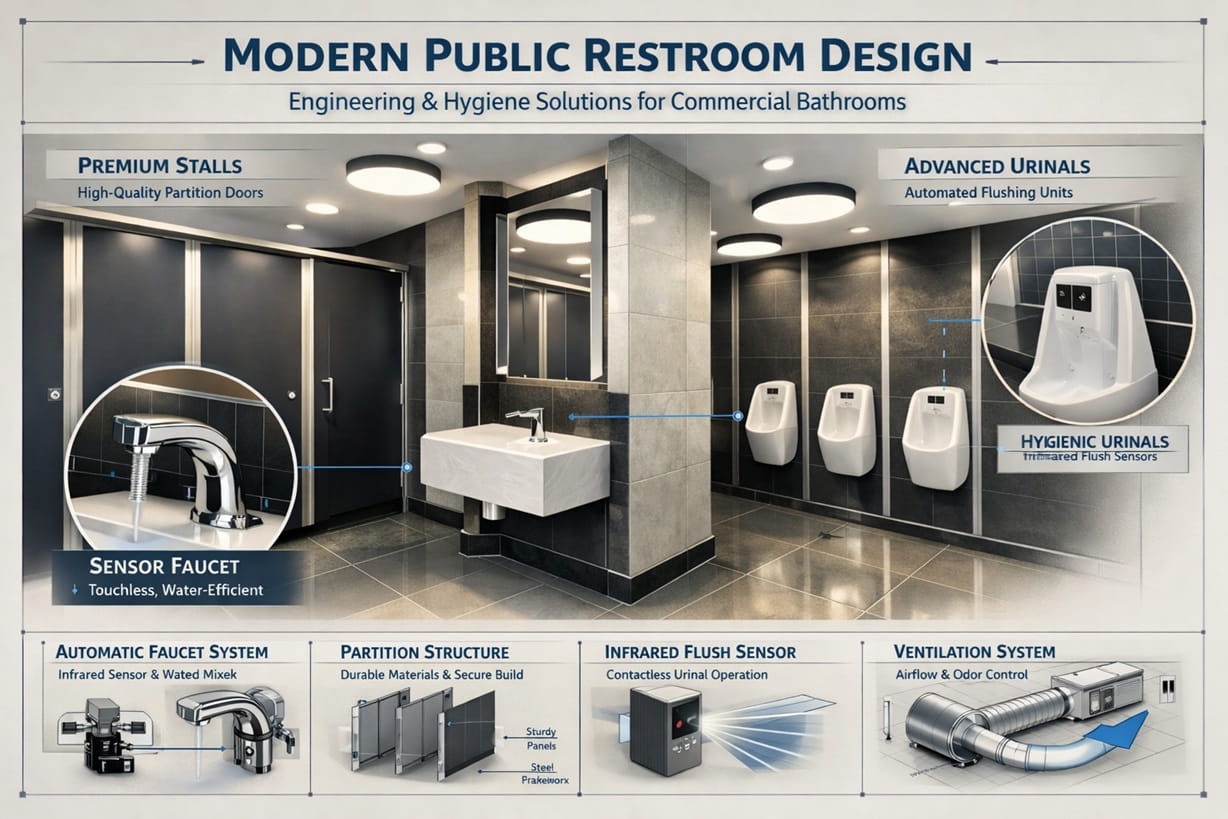
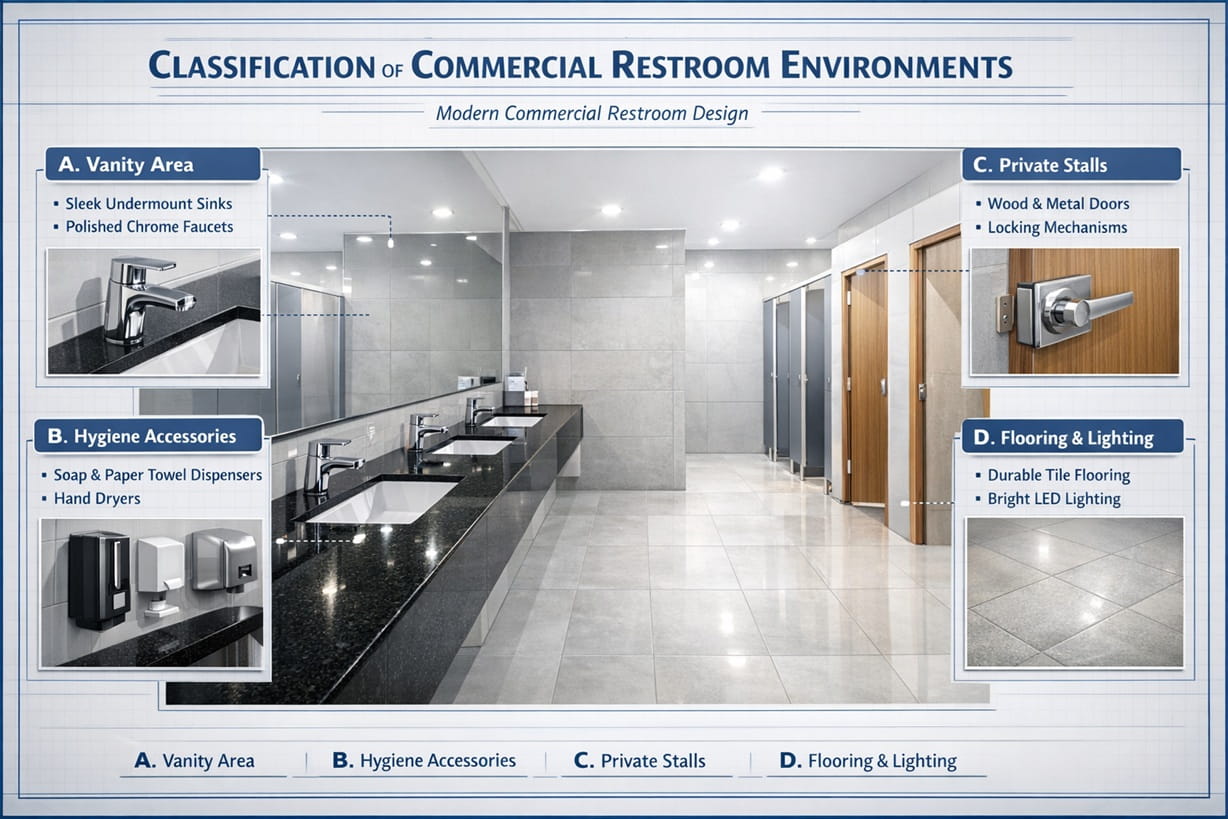
Classification of Commercial Restroom Environments
Office and Corporate Facilities
Designed for predictable daily usage with emphasis on comfort and professional presentation.
Retail and Public Facilities
Shopping malls and entertainment venues experience fluctuating peak demand.
Healthcare and Medical Institutions
CDC Infection ControlTransportation Hubs and Airports
Among the highest stress restroom environments globally.
Educational Institutions
Schools and universities require fixtures capable of heavy daily usage while maintaining safety and accessibility.
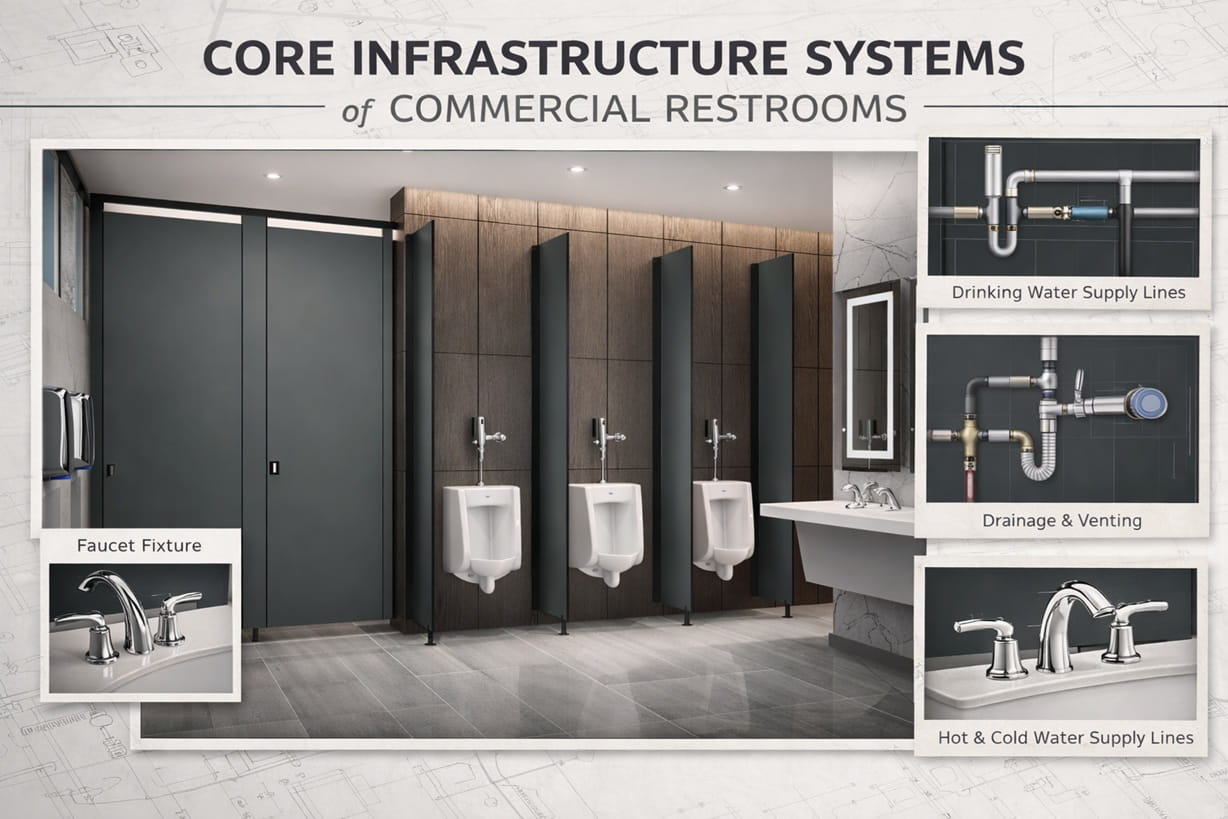
Core Infrastructure Systems of Commercial Restrooms
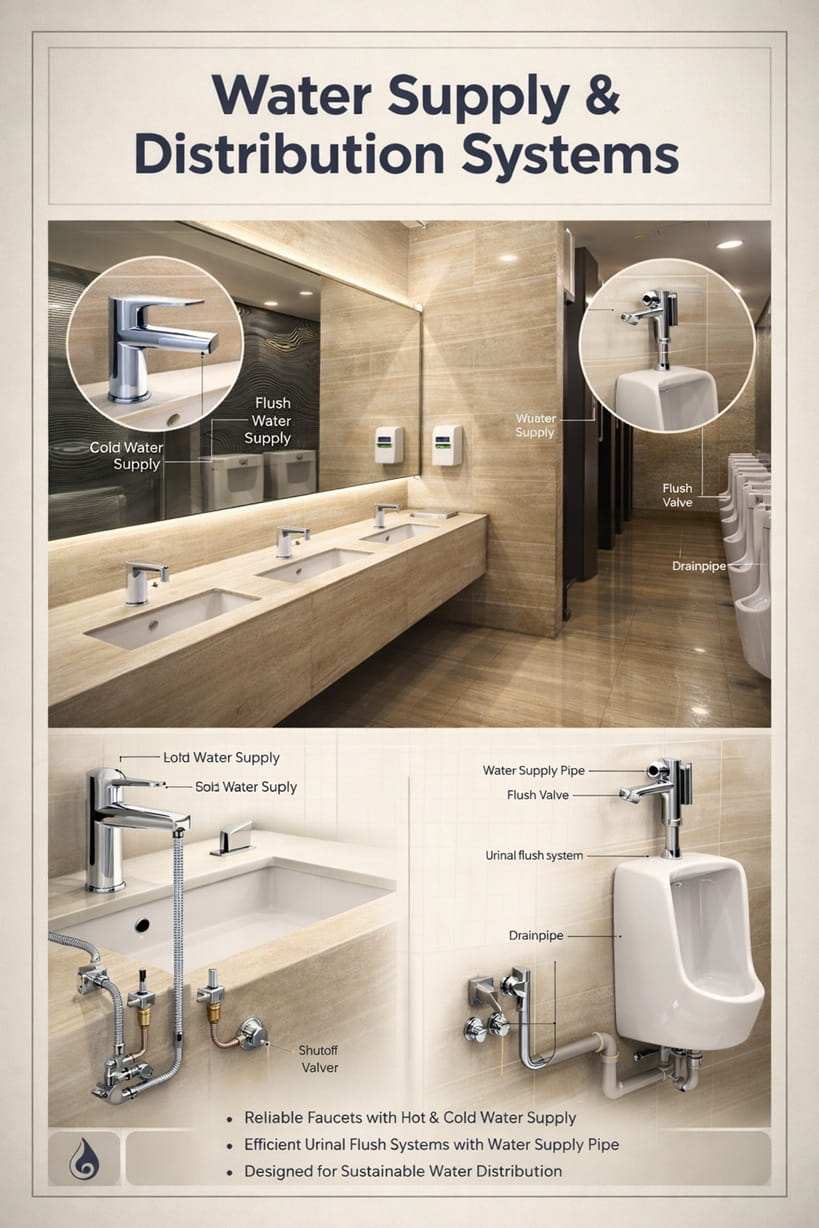
Water Supply and Distribution Systems
Sloan Valve Company Zurn Industries American StandardDrainage and Waste Management Systems
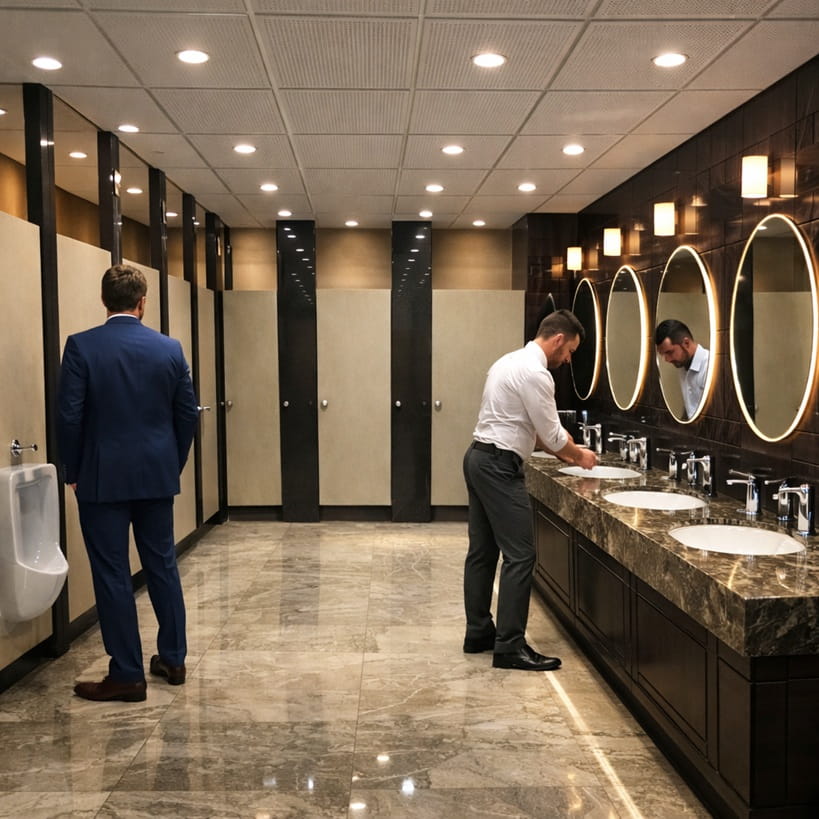
Efficient drainage prevents sanitation risks and operational shutdown.
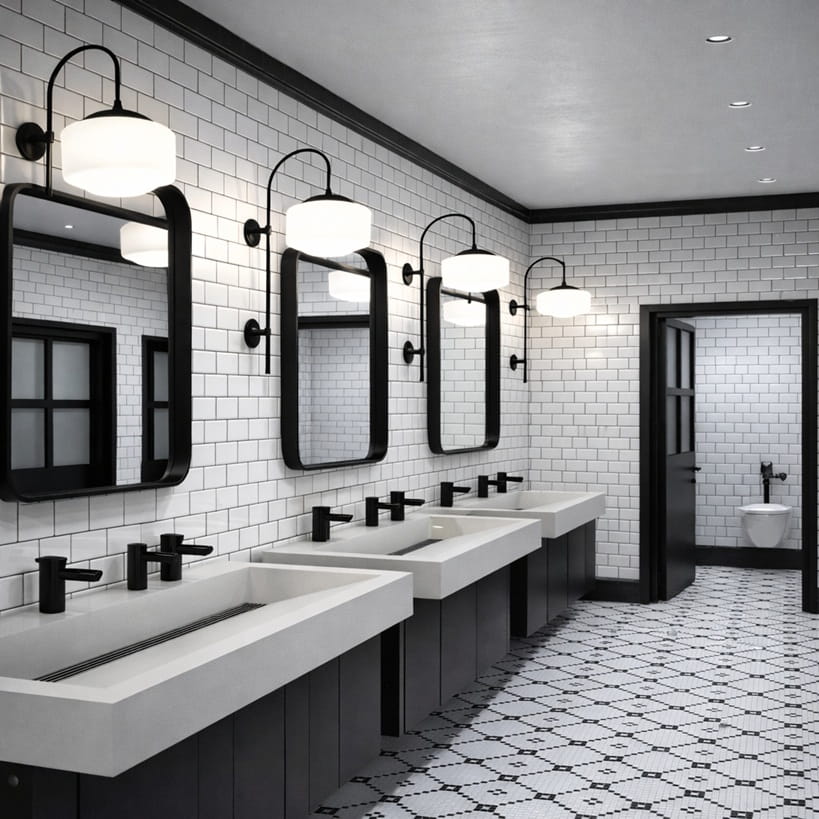
Fixture Systems in Commercial Restrooms
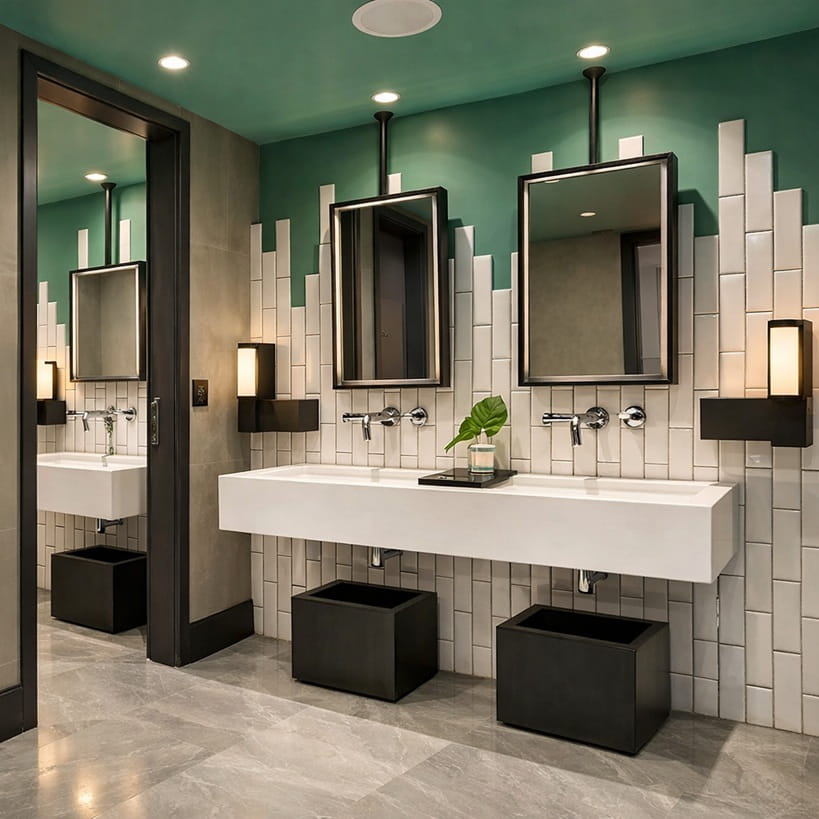
Commercial Faucets and Handwashing Stations
Chicago Faucets MOEN Commercial BathSelect FontanaShowersToilets, Flush Valves & Urinal Systems
TOTO USASoap Dispensers and Hygiene Accessories
Bobrick Washroom Equipment Bradley CorporationAccessibility and Inclusive Design Standards
ADA Accessibility StandardsCommercial restrooms must comply with accessibility regulations including wheelchair maneuvering clearance and accessible fixture heights.
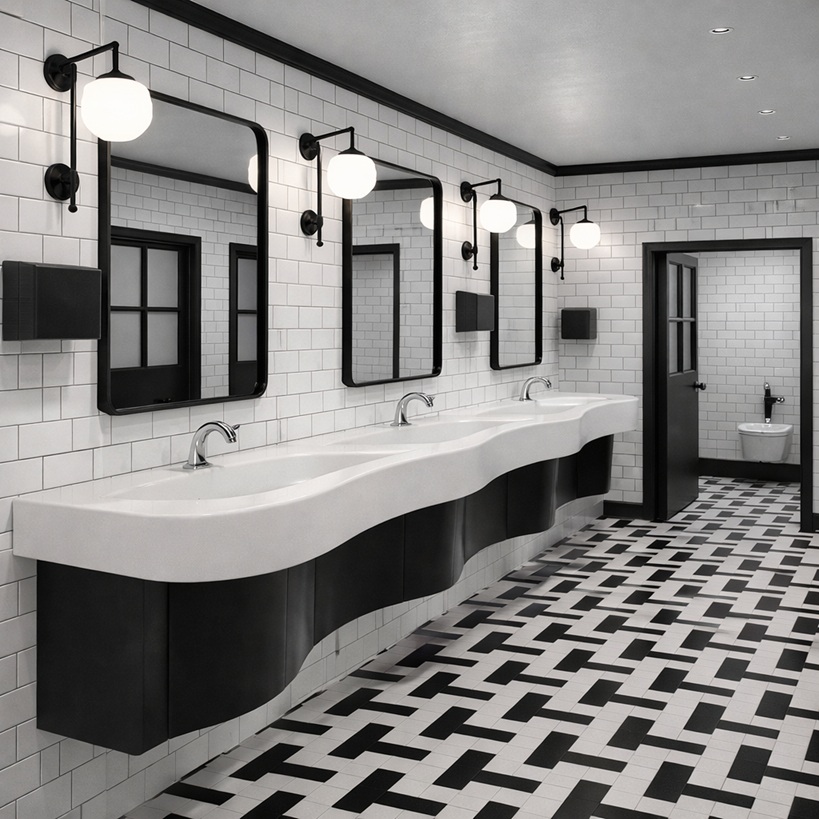
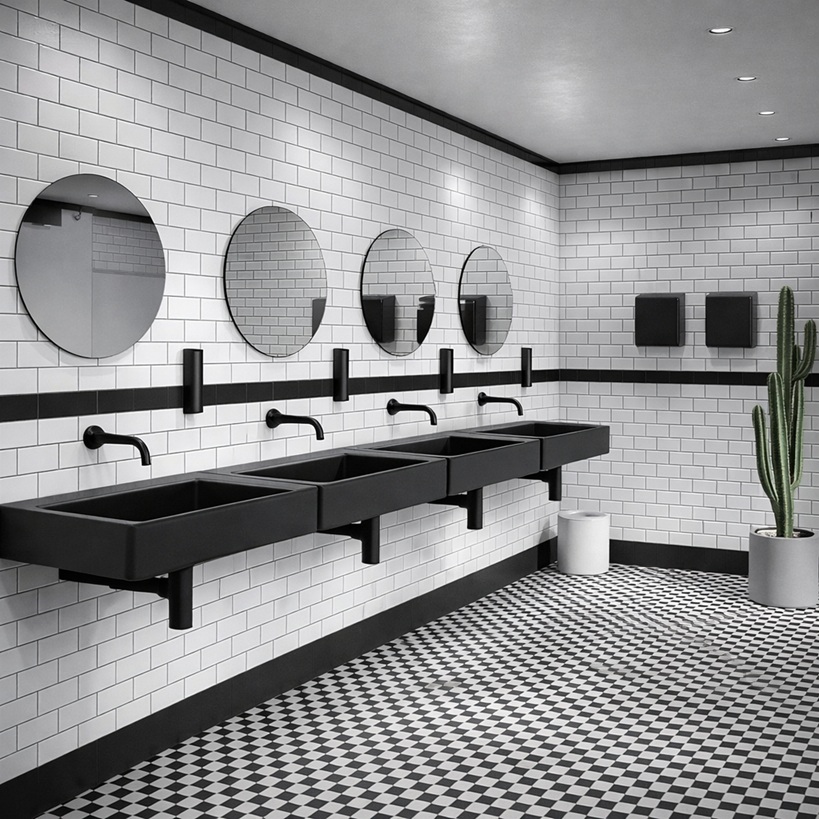
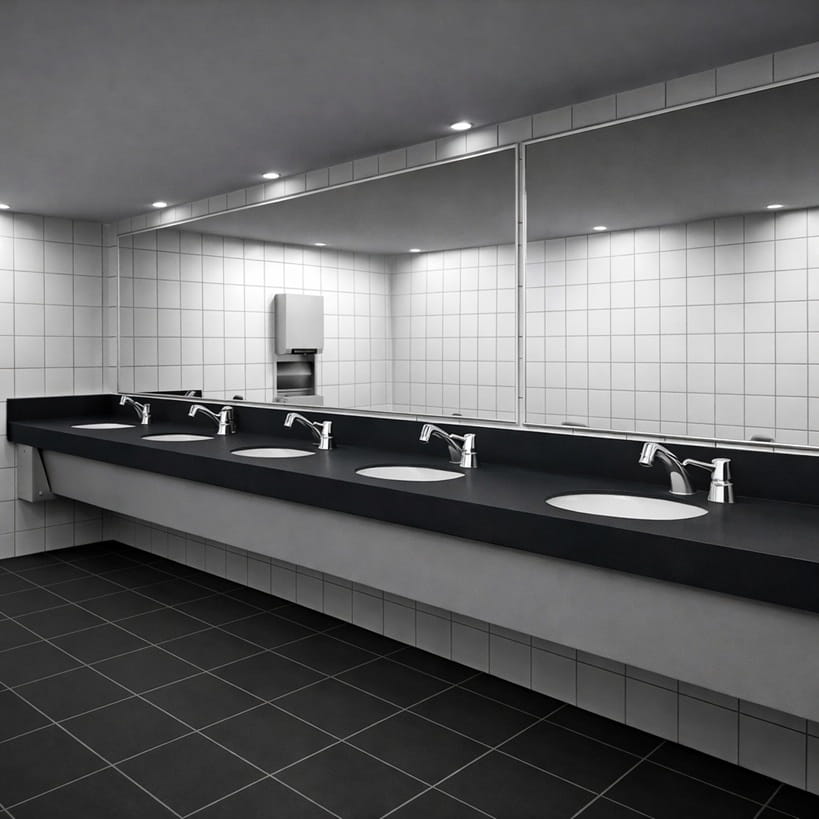
Materials Engineering in High-Traffic Environments
Commercial restroom materials must withstand moisture, chemicals, impact damage and heavy usage cycles.
Ventilation and Indoor Environmental Quality
ASHRAE StandardsRestroom ventilation impacts hygiene, odor control, humidity reduction and airborne contaminant removal.
Water Efficiency and Sustainability Goals
EPA WaterSenseCommercial restrooms are major contributors to building water usage requiring low-flow fixtures and automation.
Future Direction of Commercial Restroom Design
Future developments may include autonomous hygiene systems, AI-based maintenance scheduling, water recycling integration and sustainable material innovation.
Concluding Perspective
Commercial restrooms function as essential public infrastructure supporting health, accessibility, and operational continuity across modern society.
Their design requires coordination between engineering precision, regulatory compliance, human behavior understanding, and sustainable resource management.
Through research-driven analysis, BathroomDSGN.com documents how commercial restroom environments continue transforming into highly engineered systems shaping public hygiene and building performance worldwide.