
Showers & Bathing Systems
Technical Research, Engineering Design, and Performance Studies in Modern Bathroom Water Environments
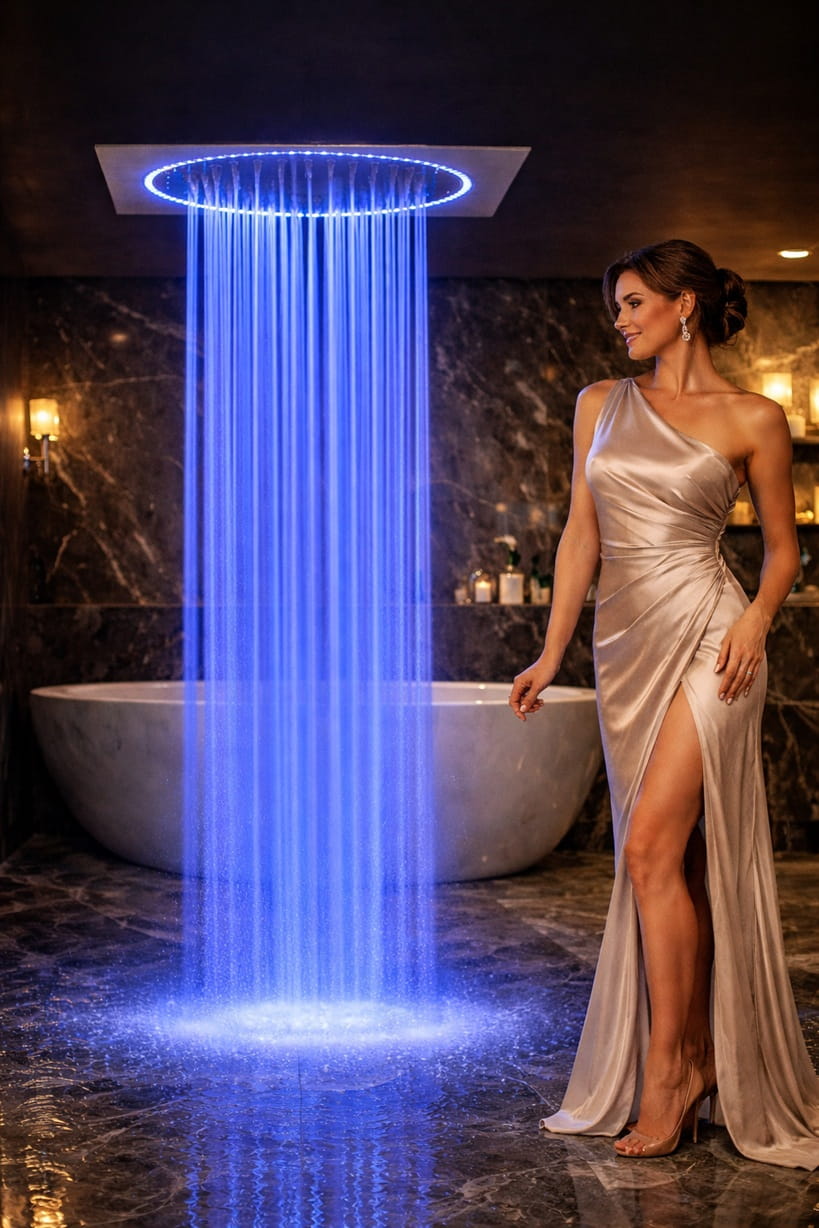
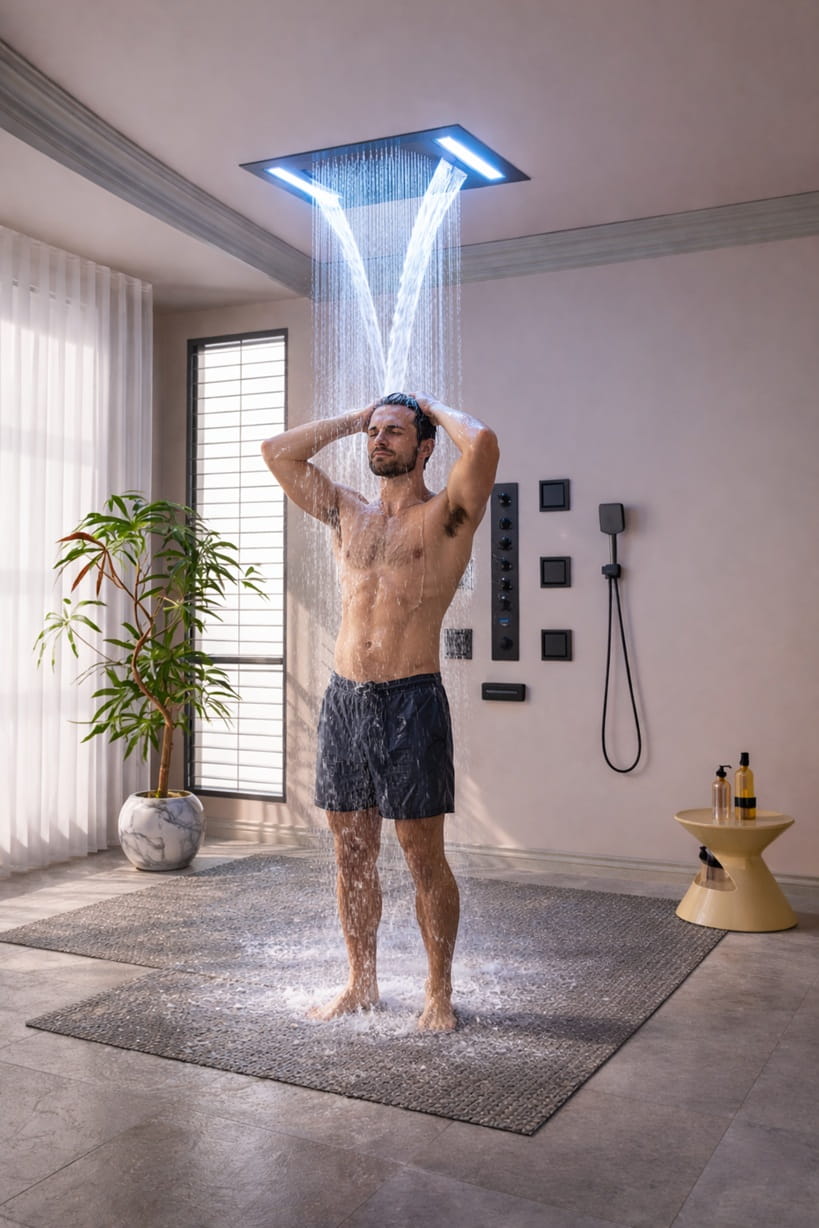
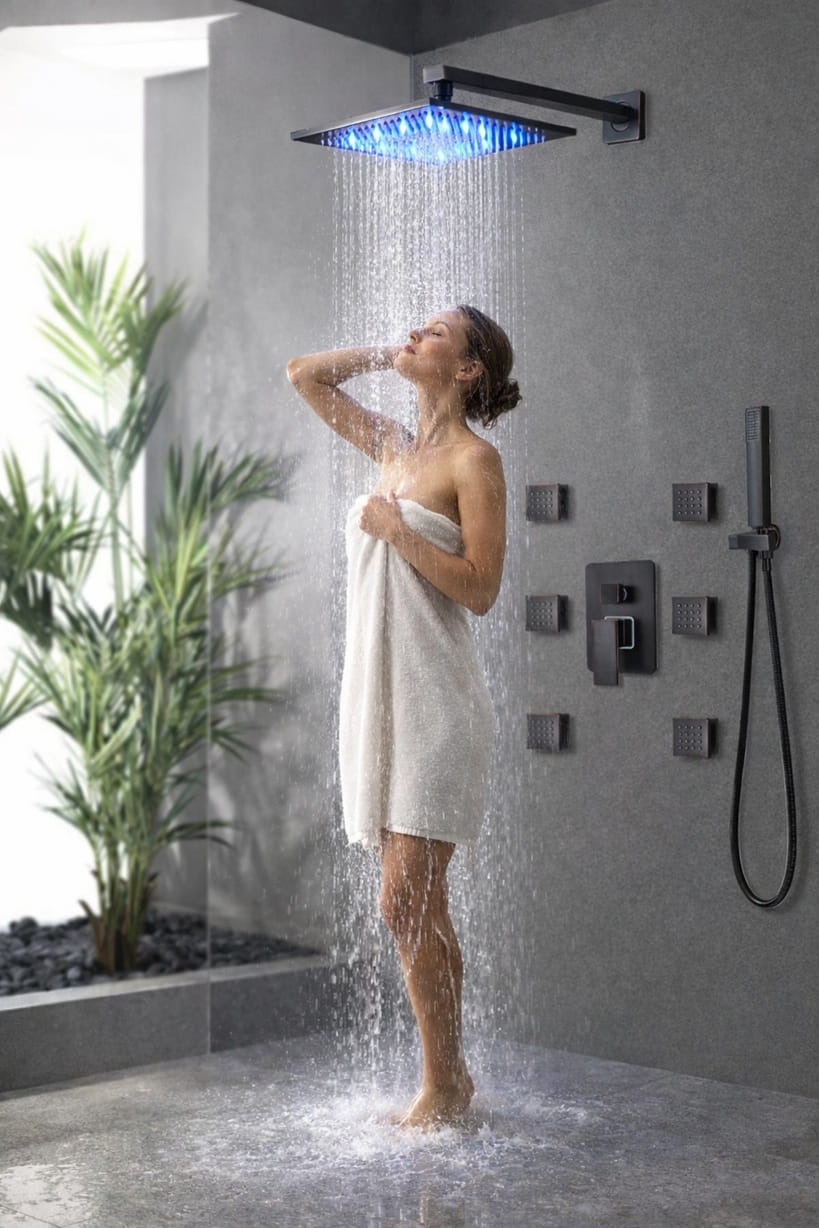
Understanding Showers as Engineered Bathing Systems
Showers and bathing systems represent one of the most sophisticated water delivery environments within modern bathrooms. Unlike faucets, which provide intermittent point-of-use water access, shower systems operate as continuous-flow hydraulic environments designed to balance comfort, safety, efficiency, and durability.
BathroomDSGN.com studies showers not simply as lifestyle fixtures but as integrated bathing infrastructures combining plumbing engineering, thermal regulation, ergonomics, material science, and human wellness principles.
Across residential homes, hospitality developments, healthcare facilities, fitness centers, and commercial buildings, shower systems directly influence water consumption behavior, user comfort and safety, energy efficiency, maintenance demands, accessibility performance, and long-term facility operation.
Modern showers have evolved from basic rinsing mechanisms into controlled environmental systems capable of delivering precision water experiences.

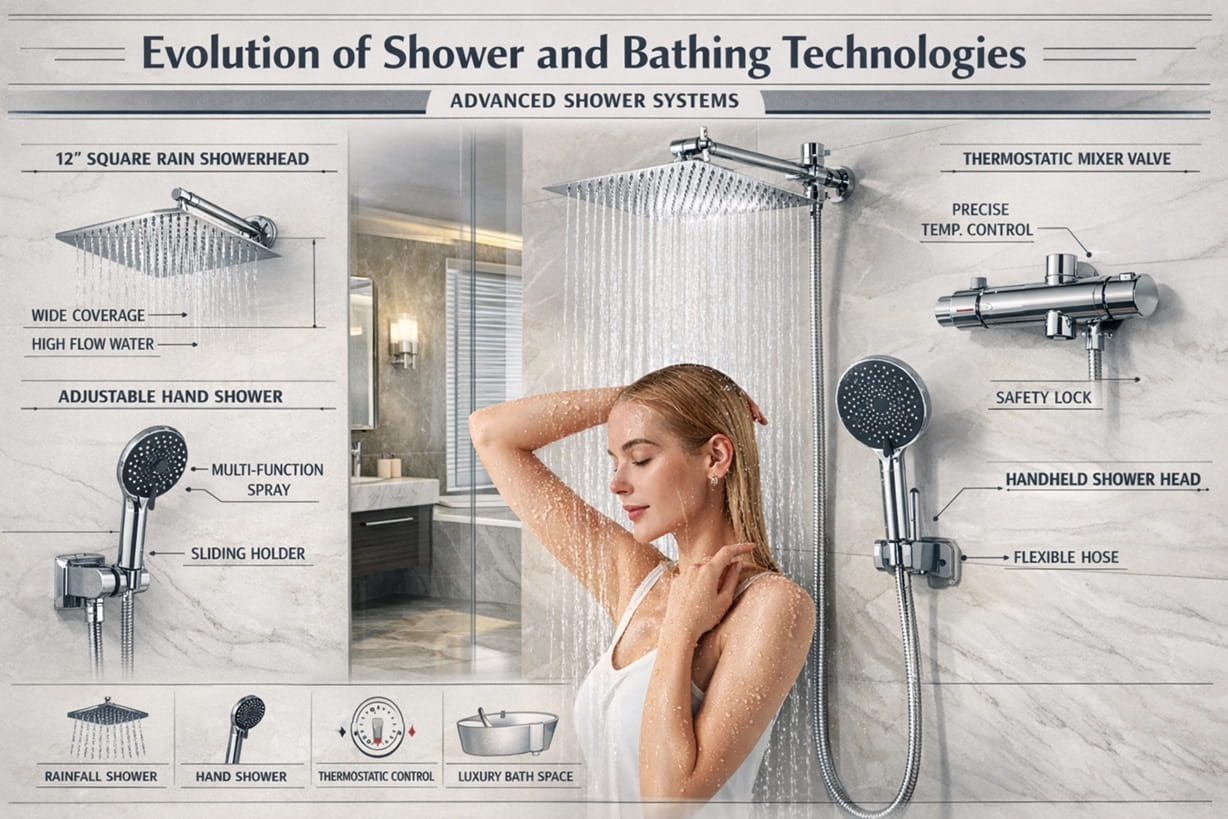
Evolution of Shower and Bathing Technologies
Early Gravity-Fed Shower Systems
Early indoor showers depended on gravity-fed tanks with minimal pressure regulation.
Pressure-Balanced Valve Development
Symmons Industries American Standard Delta Faucet CompanyPressure-balancing technology remains essential in preventing accidental scalding.
Thermostatic Shower Control Systems
Grohe USA Hansgrohe USA KohlerDigital and Smart Shower Systems
Moen Smart Water Network FontanaShowers JunoShowers
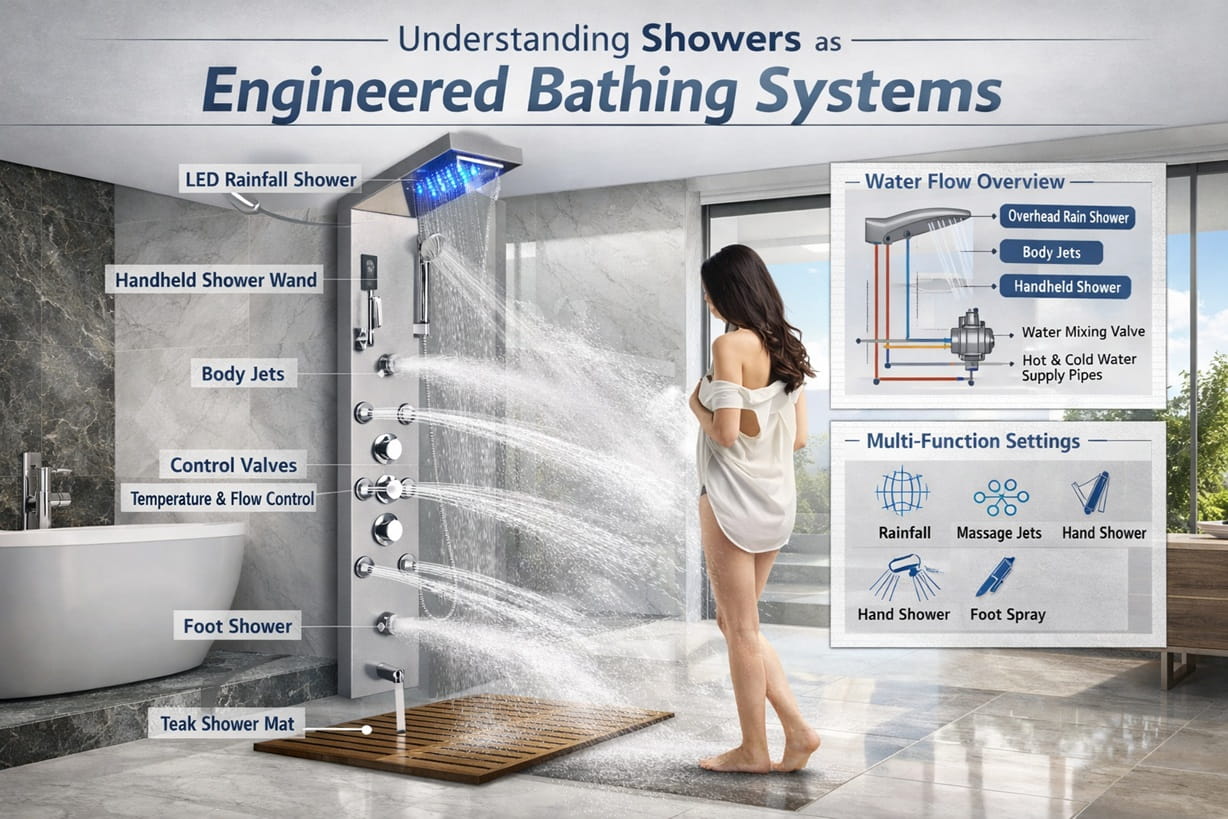
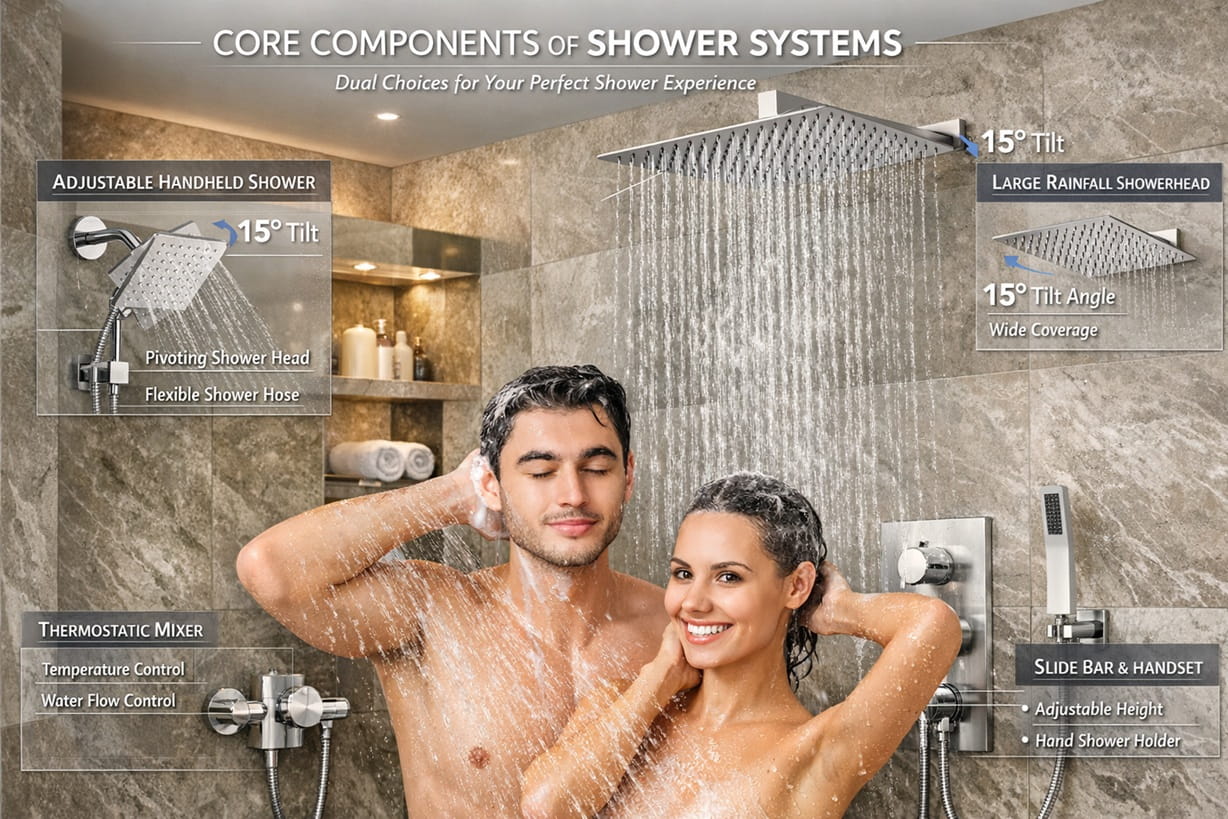
Core Components of Shower Systems
Understanding performance requires examination of internal system architecture including supply pressure management, mixing valves, diverters, showerheads, and body spray systems.
Speakman BathSelectBathtubs and Immersion Bathing Systems
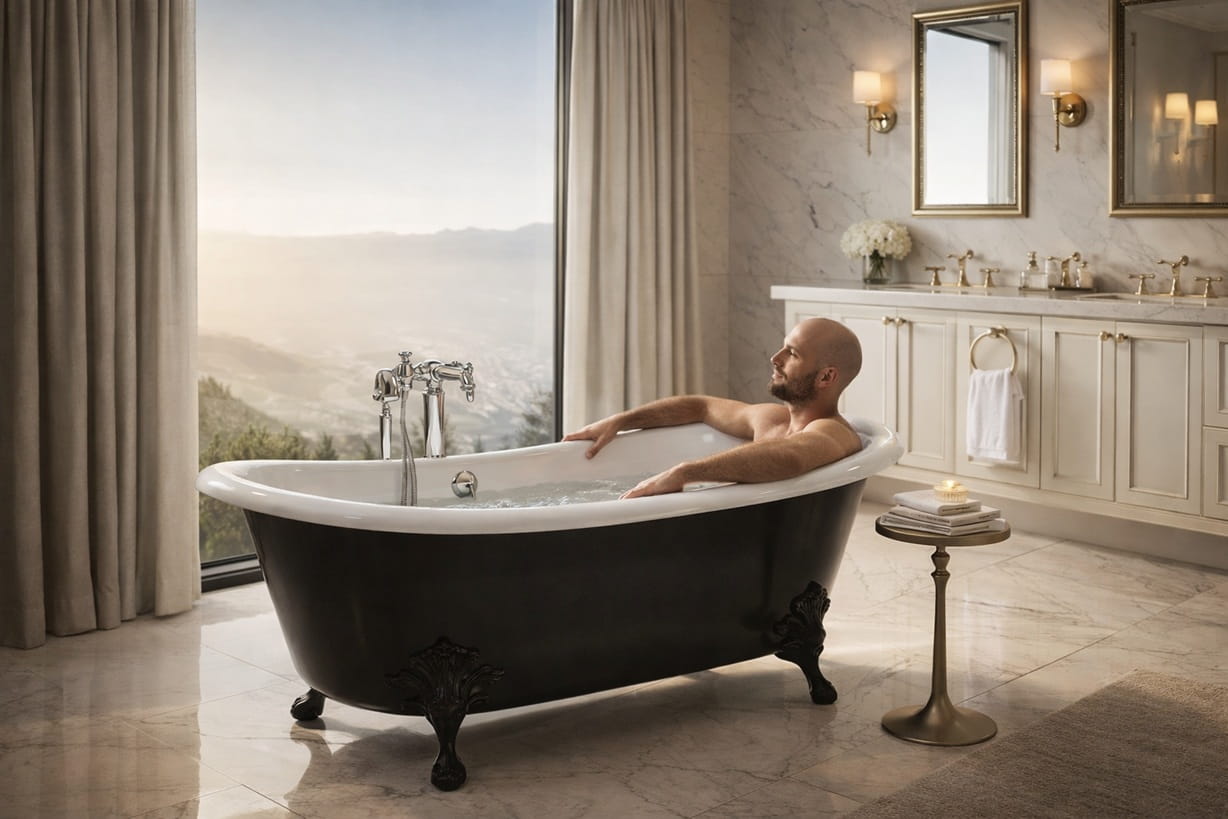
TOTO USABath systems emphasize thermal retention and ergonomic body support across alcove, freestanding, walk-in and hydrotherapy installations.
Healthcare & Institutional Bathing Environments
ADA Accessibility StandardsHealthcare showers must address anti-scald protection, accessibility controls and infection-control integration.
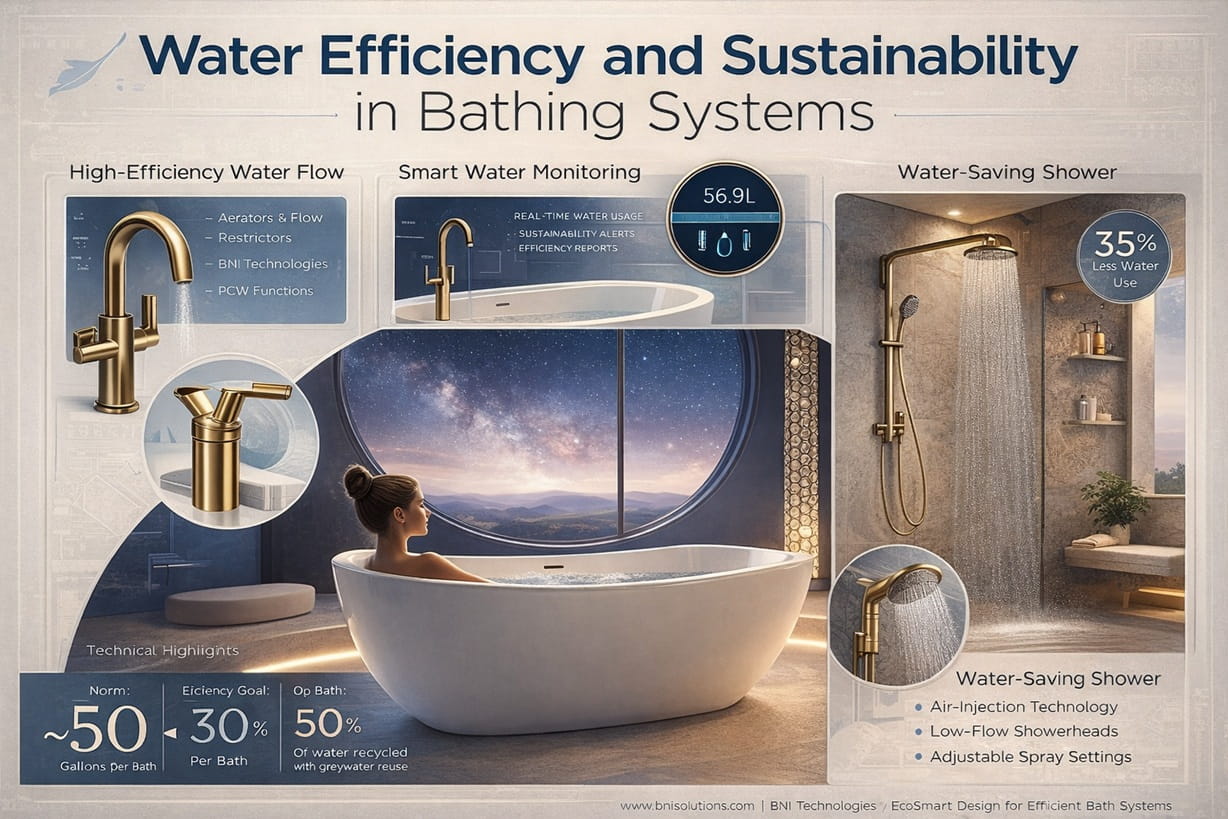
Water Efficiency and Sustainability in Bathing Systems
EPA WaterSenseEfficiency strategies include low-flow showerheads, flow restrictors and recirculation efficiency improvements.
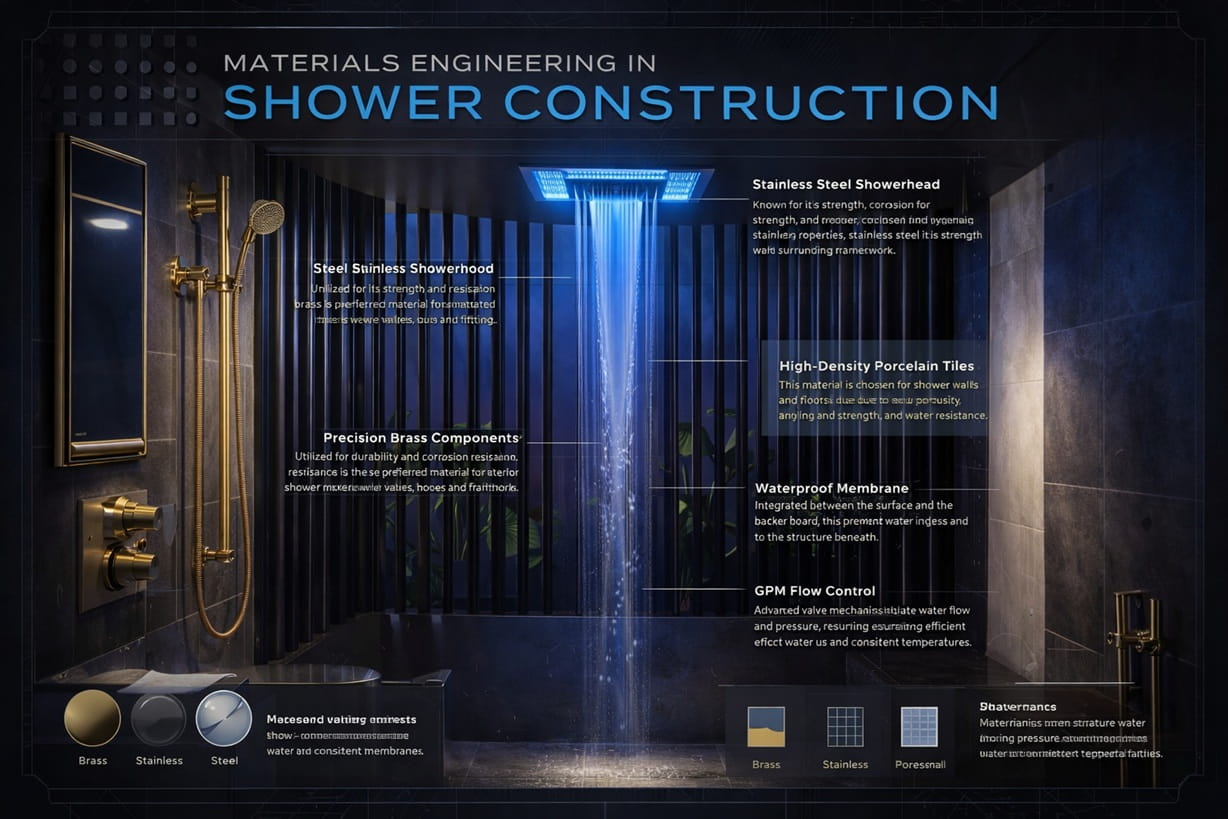

Materials Engineering in Shower Construction
Shower durability depends on stainless steel, brass fittings, tempered glass, acrylic composites and stone resin materials.
Maintenance and Lifecycle Performance
| Component | Average Lifespan |
|---|---|
| Shower valve | 10–20 years |
| Cartridge | 5–10 years |
| Showerhead | 5–8 years |
| Electronic controller | 4–7 years |
Future Direction of Bathing Systems
Future shower environments may integrate AI-based temperature adaptation, water recycling technologies, health monitoring integration and net-zero water systems.
Concluding Perspective
Showers and bathing systems represent one of the most immersive human interactions with water within the built environment.
Their successful design requires coordination between engineering precision, safety regulation, sustainability goals, and human comfort.
Through ongoing research and technical analysis, BathroomDSGN.com documents how bathing systems continue evolving into highly engineered environments shaping hygiene, wellness, and environmental responsibility worldwide.
Shower & Bathing System Resources
Modern shower and bathing systems combine water efficiency, comfort, spray performance, temperature control, durability, and design flexibility to enhance residential, hospitality, and wellness-focused bathroom environments.
- BathSelect shower systems support luxury bathroom projects with rainfall, thermostatic, and multifunction configurations.
- Fontana shower systems support hospitality, residential, and commercial bathing environments.
- GROHE shower systems combine engineering performance with modern bathroom aesthetics.
- hansgrohe shower technologies support advanced spray experiences and water-efficient bathing.
- KOHLER shower systems provide digital controls, luxury showering, and customizable configurations.
- Moen shower solutions support smart controls and enhanced user convenience.
- Delta shower systems support performance-focused bathing and water-saving technologies.
- EPA WaterSense shower resources support efficient water use and fixture selection.
- NKBA bathroom planning resources support shower layout, remodeling, and bathing space design.
- BIMobject shower resources help designers coordinate specifications and project documentation.
Successful bathing system selection balances comfort, water efficiency, maintenance, design goals, and long-term performance to create a better everyday bathroom experience.