
Faucets and Water Systems
Comprehensive Research on Bathroom Water Delivery, Engineering Performance, and Infrastructure Design
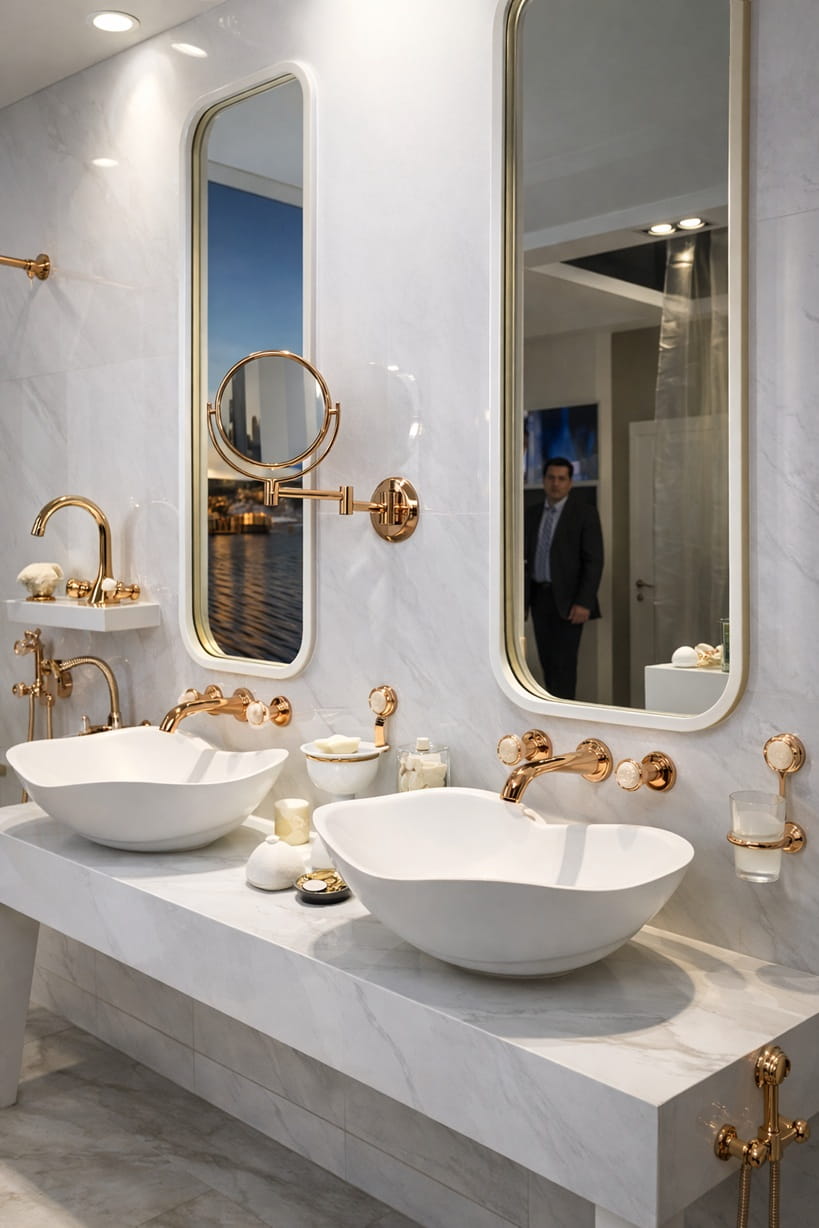
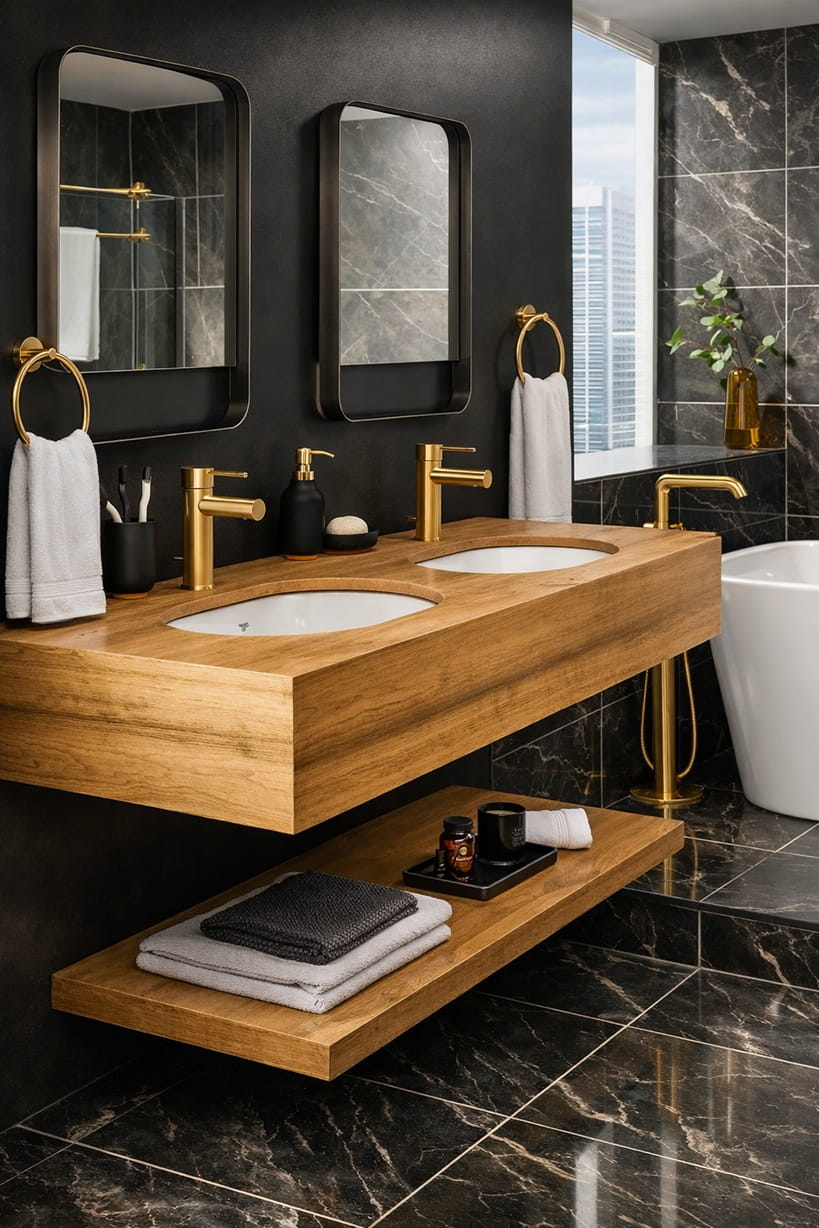
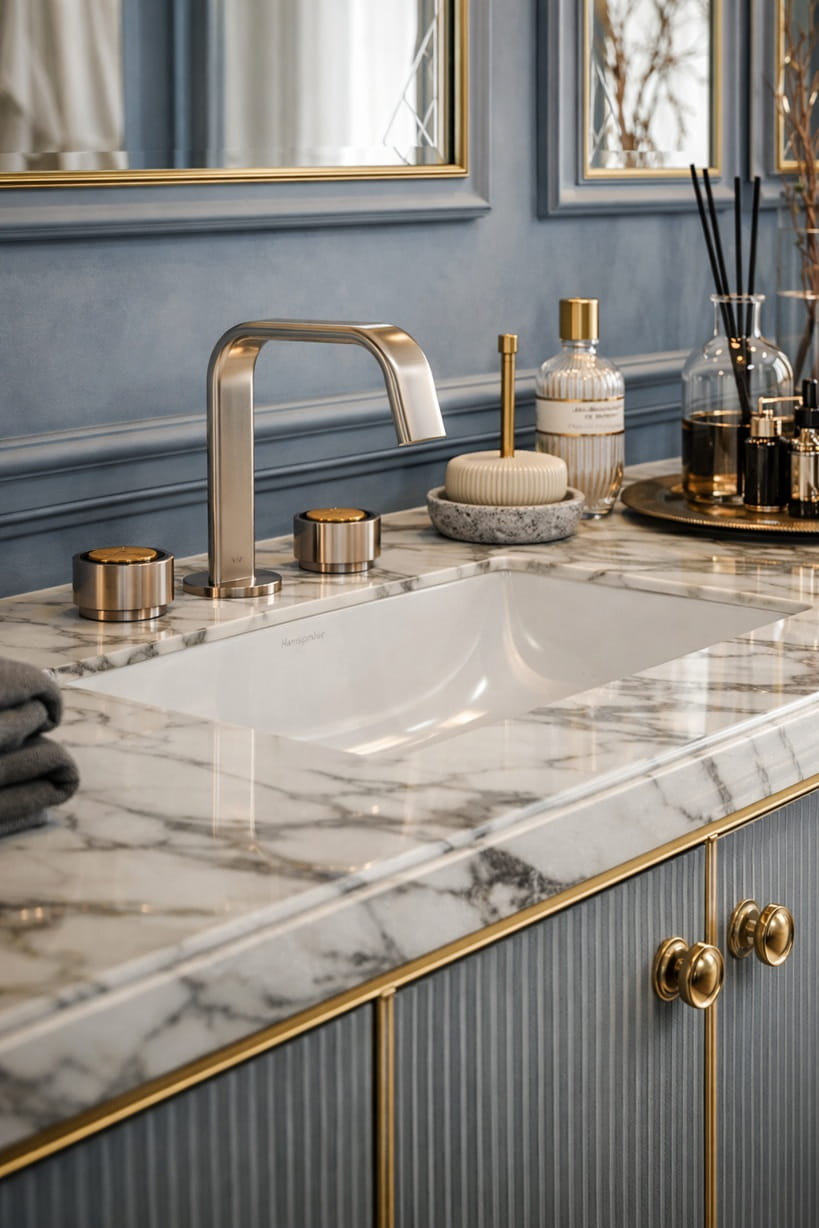
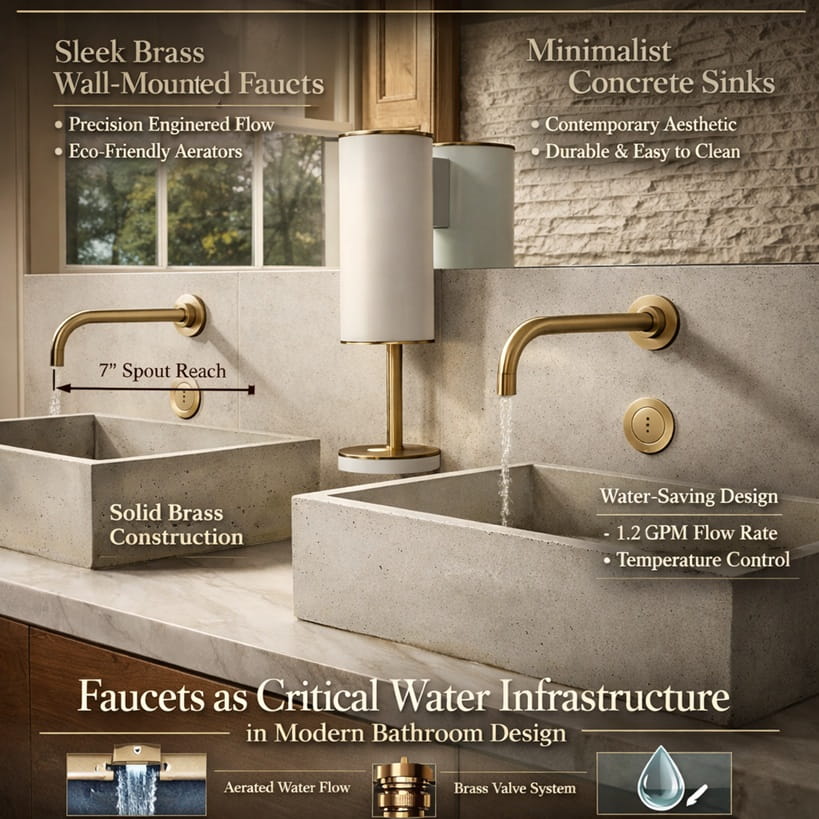
Faucets as Critical Water Infrastructure in Modern Bathroom Design
Within modern architecture, faucets are often visually small elements occupying limited spatial footprint. However, from an engineering and operational perspective, faucets represent one of the most complex and continuously active systems inside any building.
Every bathroom interaction — washing hands, sanitation procedures, grooming routines, healthcare cleaning, or commercial facility usage — begins and ends with controlled water delivery.
BathroomDSGN.com approaches faucets not as decorative accessories but as terminal control devices within broader water distribution systems, linking municipal supply networks to human interaction.
A faucet must simultaneously manage hydraulic pressure regulation, temperature safety, flow efficiency, mechanical durability, electronic automation, hygiene compliance, and environmental sustainability.
Because of this, faucets operate at the intersection of plumbing engineering, industrial design, electronics, and public health science.




The Role of Water Systems in Built Environments
Municipal Water Infrastructure
Drinking Water RegulationsBuilding Plumbing Networks
Internal plumbing distributes water through vertical risers, branch supply lines, pressure zones, and hot water recirculation loops.
Point-of-Use Delivery
At the fixture level, faucets must compensate for pressure fluctuations, temperature imbalance, pipe scaling, usage peaks, and system aging.

Historical Evolution of Faucet Engineering
Compression Valve Era
Early faucets relied on threaded stems compressing rubber washers against valve seats.
Cartridge-Based Systems
MOEN Delta Faucet CompanyThe introduction of replaceable cartridges marked a major engineering milestone improving lifespan and servicing efficiency.
Ceramic Disc Technology
Kohler Grohe USACeramic disc cartridges became industry standards due to hardness, precision tolerances and resistance to mineral abrasion.

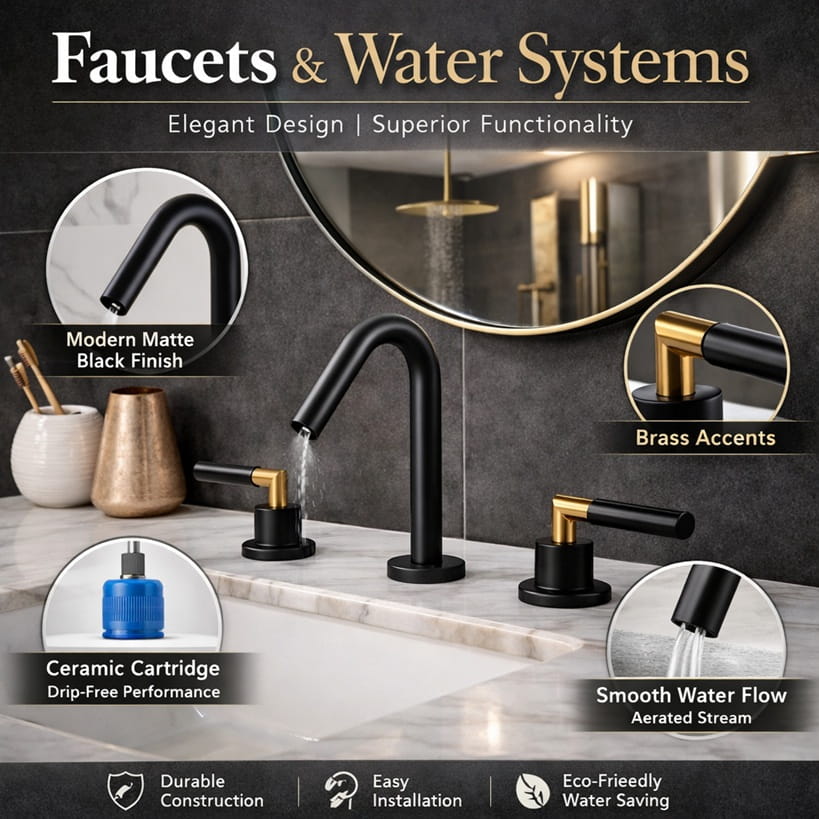

Electronic & Sensor-Based Faucets
Sloan Valve Company Chicago Faucets BathSelect FontanaShowersSensor faucets introduced programmable water activation eliminating unnecessary flow while improving hygiene standards.
Anatomy of Modern Faucet Systems
American Standard Symmons Industries EPA WaterSenseA modern faucet operates as a coordinated mechanical-electronic assembly including supply inlet systems, mixing chambers, aeration control, electronic modules and solenoid valve assemblies.
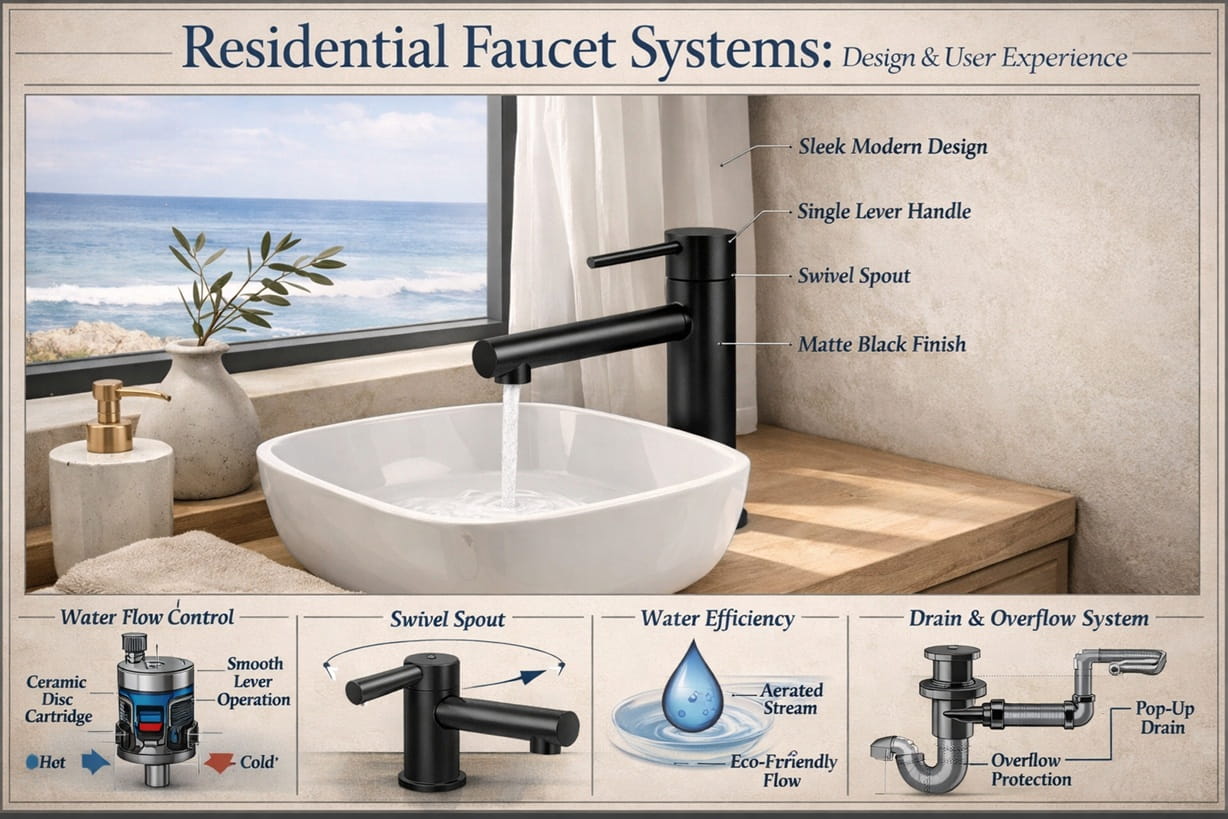
Residential Faucet Systems: Design & User Experience
Hansgrohe USAResidential bathrooms emphasize personalization and aesthetic integration including quiet operation and smooth manual control.
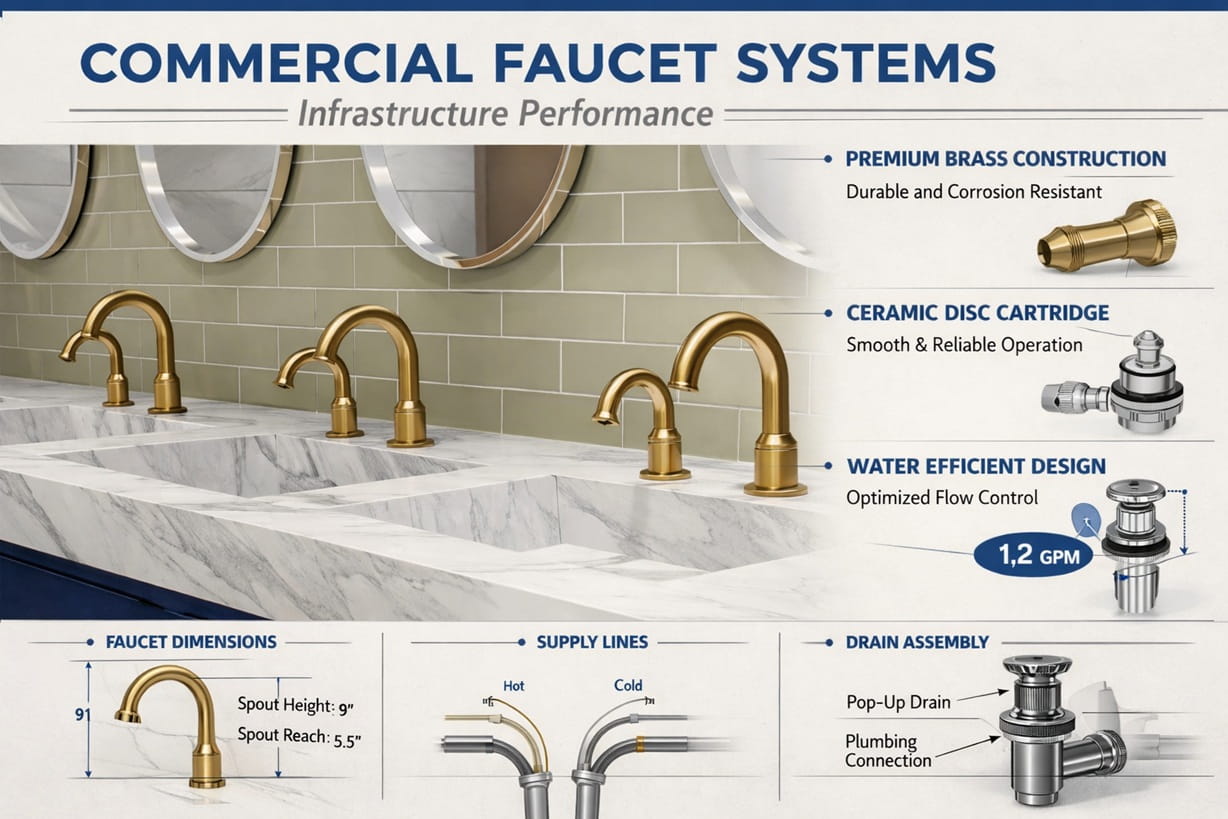
Commercial Faucet Systems: Infrastructure Performance
Zurn IndustriesCommercial restrooms operate under drastically different stress conditions prioritizing reliability and maintenance reduction.
Maintenance, Failure Modes & Lifecycle Analysis
| Component | Average Lifespan |
|---|---|
| Faucet body | 15–20 years |
| Cartridge | 5–10 years |
| Sensor | 5–8 years |
| Solenoid | 3–6 years |
| Control module | 4–7 years |
Future Outlook: The Next Generation of Water Systems
Future bathroom water systems are expected to integrate AI-assisted water management, usage prediction analytics, health monitoring integration, greywater reuse compatibility and net-zero water building concepts.
Concluding Perspective
Faucets and water systems quietly define sanitation, sustainability, and user comfort across every building type worldwide.
Understanding their engineering transforms bathroom design from aesthetic decision-making into performance-based environmental planning.
Through continued technical research, cross-brand analysis, and infrastructure studies, BathroomDSGN.com documents how water delivery systems shape the future of modern bathroom environments.